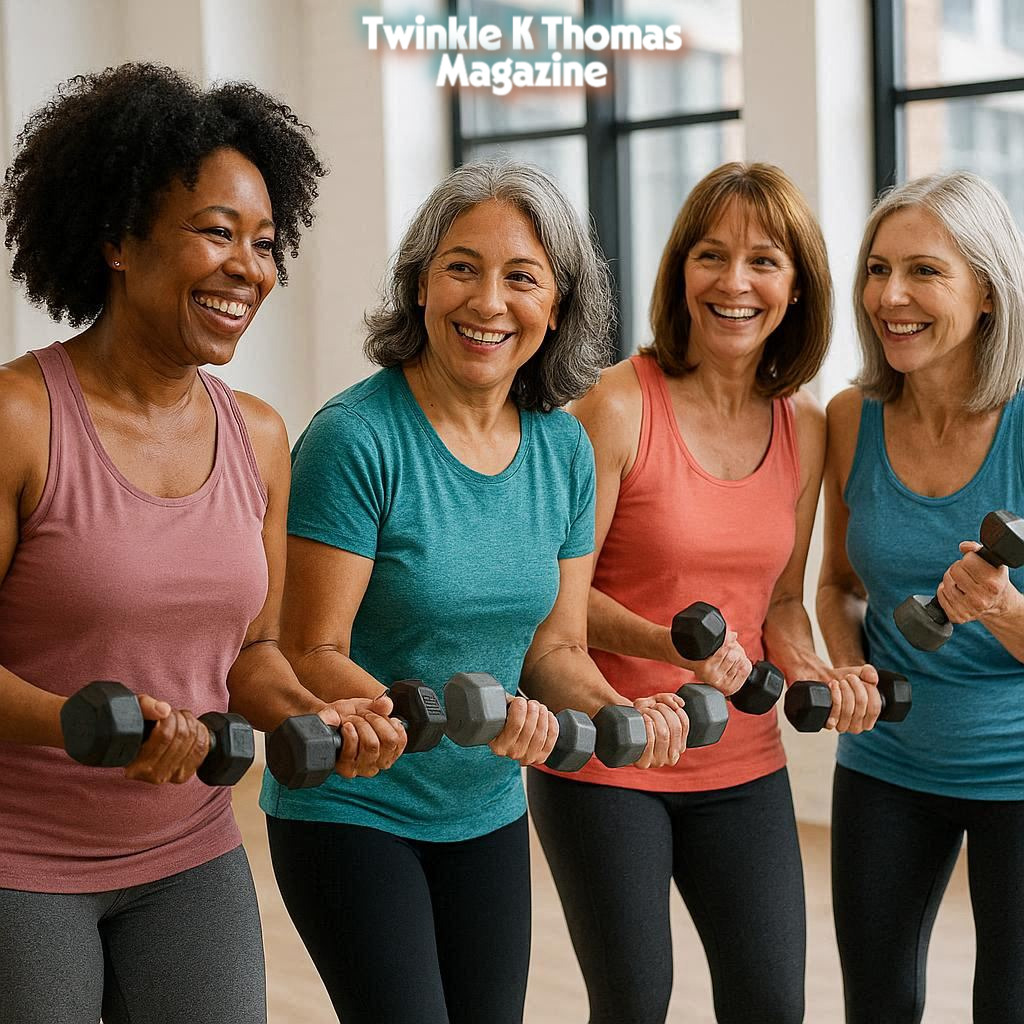
Discover the best home exercises for women over 40 to build strength, boost metabolism, and improve vitality. Our safe, effective guide requires minimal equipment and fits your busy life.
Entering your 40s is a powerful transition. It’s a time of increased confidence and clarity, but it’s also when your body begins to signal the need for a smarter approach to fitness. Metabolism naturally slows, hormonal shifts (like perimenopause) can affect weight and energy, and the focus necessarily shifts from simply looking a certain way to feeling strong, capable, and healthy for the long term.
The great news? Your 40s are the perfect time to build your strongest, most resilient body yet. You don’t need a gym membership or hours of free time. With strategic, science-backed exercises done at home, you can combat muscle loss, strengthen bones, boost your mood, and ignite your metabolism.
This comprehensive guide provides a safe, effective, and sustainable home workout plan designed specifically for the unique physiological needs of women over 40.
The 40+ Fitness Philosophy: Why This Decade is Different
Before we dive into the exercises, it’s crucial to understand the “why” behind the program. The goals for women over 40 center on healthspan—the quality of your years.
- Preserve & Build Muscle (Fight Sarcopenia): From age 40, we can lose 3-5% of muscle mass per decade. Muscle is your metabolic engine; losing it slows metabolism. Strength training is non-negotiable.
- Strengthen Bones (Osteoporosis Prevention): Weight-bearing and resistance exercises are proven to increase bone density, critical as estrogen declines.
- Support Joint & Heart Health: Low-impact cardio maintains cardiovascular fitness without pounding your joints. Focus on movement that nourishes, not wears down.
- Enhance Stability & Prevent Falls: Balance naturally declines. Incorporating stability work is essential for injury prevention and lifelong mobility.
- Manage Stress & Hormones: Exercise regulates cortisol and boosts endorphins, helping to manage perimenopausal symptoms, sleep, and mood.
Your Essential Home Exercise Toolkit
You need very little to get started:
- A mat for comfort
- Dumbbells (a pair of light (5-8 lbs) and medium (10-15 lbs) is ideal. Water bottles or resistance bands work too.)
- A sturdy chair (for squats, tricep dips, and balance)
- Your own bodyweight
The 5 Pillars of a Balanced 40+ Home Workout
A holistic weekly plan incorporates these elements. Aim for 30-45 minutes, 4-5 days per week.
Pillar 1: Foundational Strength Training (2-3x/week)
This is your priority. Focus on compound movements that work multiple muscle groups.
1. The Chair-Assisted Squat
- Why: Builds quad, glute, and hamstring strength—the powerhouse muscles that support knees, hips, and back. The chair ensures proper form and builds confidence.
- How: Stand in front of a chair, feet hip-width apart. Send your hips back and bend your knees to lower down until you gently tap the chair seat. Keep chest lifted. Press through heels to stand. No sitting! Aim for 3 sets of 12-15 reps.
2. The Glute Bridge
- Why: Combats “desk butt,” strengthens the posterior chain (glutes, hamstrings, lower back), and stabilizes the pelvis.
- How: Lie on your back, knees bent, feet flat. Engage your core and squeeze your glutes to lift your hips toward the ceiling until your body forms a straight line from shoulders to knees. Hold for 2 seconds at the top. Lower with control. For progression, try single-leg bridges. Aim for 3 sets of 15 reps.
3. Incline Push-Ups
- Why: Builds upper body and core strength without straining the lower back. Essential for maintaining functional independence.
- How: Place hands on a wall, kitchen counter, or sturdy table, wider than shoulder-width. Walk feet back until body is at an angle. Keep core tight and body straight. Lower chest toward surface, then push back up. Aim for 3 sets of as many reps as you can with good form (8-15).
4. Bent-Over Dumbbell Rows
- Why: Counters rounded shoulders from sitting, builds a strong back for better posture, and engages the core.
- How: Hold a dumbbell in each hand. Hinge at hips with a soft knee bend, back flat, torso near parallel to floor. Pull weights toward ribcage, squeezing shoulder blades. Lower with control. Aim for 3 sets of 10-12 reps.
Pillar 2: Core & Stability (Integrate into every workout)
A strong core is about stability, not six-packs. It protects your spine and improves balance.
1. Forearm Plank
- Why: Builds total-body isometric strength, focusing on deep core stabilizers.
- How: On forearms and toes, body in a straight line. Engage glutes and pull navel toward spine. Hold for 20-40 seconds. Repeat 3 times. Avoid sagging hips.
2. Bird-Dog
- Why: The ultimate anti-rotation exercise. Teaches the core to stabilize while limbs move, preventing back pain.
- How: On all fours. Simultaneously extend right arm forward and left leg back, keeping hips level. Hold for 3 seconds, return. Alternate. Aim for 2 sets of 10 reps per side.
Pillar 3: Low-Impact Cardio (2-3x/week)
Sustain a raised heart rate without joint stress.
- Brisk Walking: 30 minutes is gold standard. Use a fitness tracker to ensure you’re in a moderate zone (able to talk, not sing).
- Home Options: Marching in place, step-ups on a low stair, dancing, or following a low-impact aerobic video. Aim for 20-30 minutes.
Pillar 4: Flexibility & Mobility (Daily, especially post-workout)
Never skip the cooldown. It aids recovery, maintains range of motion, and reduces stiffness.
- Cat-Cow Stretch: 10 reps to warm up and mobilize the spine.
- Hip Flexor Stretch: Hold for 30 seconds per side to combat sitting.
- Chest Opener in Doorway: 30-second hold to improve posture.
- Legs-Up-the-Wall: 5-10 minutes to reduce swelling and promote relaxation.
Pillar 5: Balance & Agility (2x/week)
Practice makes perfect. Do these near a wall or chair for support.
- Single-Leg Stand: Brush teeth while balancing on one foot. Work up to 30 seconds per leg.
- Heel-to-Toe Walk: Walk in a straight line as if on a tightrope for 10-20 steps.
Sample Weekly Schedule
- Monday: Foundational Strength (Squats, Rows, Bridges, Push-ups) + 10-min Mobility
- Tuesday: 30-min Brisk Walk or Low-Impact Cardio
- Wednesday: Active Recovery (Gentle Yoga or 30-min walk)
- Thursday: Foundational Strength + Balance Drills
- Friday: 30-min Low-Impact Cardio of choice
- Saturday: Fun Activity (Hiking, Gardening, Dancing)
- Sunday: Complete Rest or Gentle Stretching
Critical Success Principles for Women 40+
- Progress Over Perfection: Consistency is 1000% more important than intensity. Showing up for a 15-minute session is a win.
- Master Form First: Quality of movement prevents injury. Go slower, feel the muscle working.
- Embrace Progressive Overload: Once 15 reps feel easy, add a heavier weight, more sets, or a more challenging variation (e.g., bodyweight squat to goblet squat).
- Fuel and Recover: Protein intake is crucial for muscle repair. Prioritize sleep and hydration—this is when your body rebuilds.
- Listen to Your Body: Distinguish between good muscle fatigue and bad joint pain. The latter means stop. Honor your energy levels, which may fluctuate with your cycle.
Conclusion: Your Home, Your Gym, Your Stronger Self
Fitness after 40 isn’t about turning back the clock; it’s about owning your time with strength and grace. This home-based approach removes all barriers—time, cost, and intimidation. By focusing on intelligent strength training, heart-healthy movement, and mindful recovery, you are investing in the most important asset you have: your ability to live an active, vibrant, and independent life for decades to come.
Start today with one squat, one plank, one walk. Your future self will thank you for every single rep.
Disclaimer
Please read this disclaimer carefully before beginning any new exercise program.
The information provided in this article is for educational and informational purposes only and is not intended as medical advice or a substitute for professional personal training.
- Consult a Professional: It is essential to consult with your physician or a qualified healthcare provider before starting any new exercise regimen, especially if you have pre-existing health conditions, are pregnant/postpartum, or have any concerns about your physical readiness.
- Listen to Your Body: Never push through sharp or acute pain. Proper form is critical to prevent injury.
- Individual Results Vary: Consistency, nutrition, and genetic factors influence results. Focus on health and strength gains over scale weight.