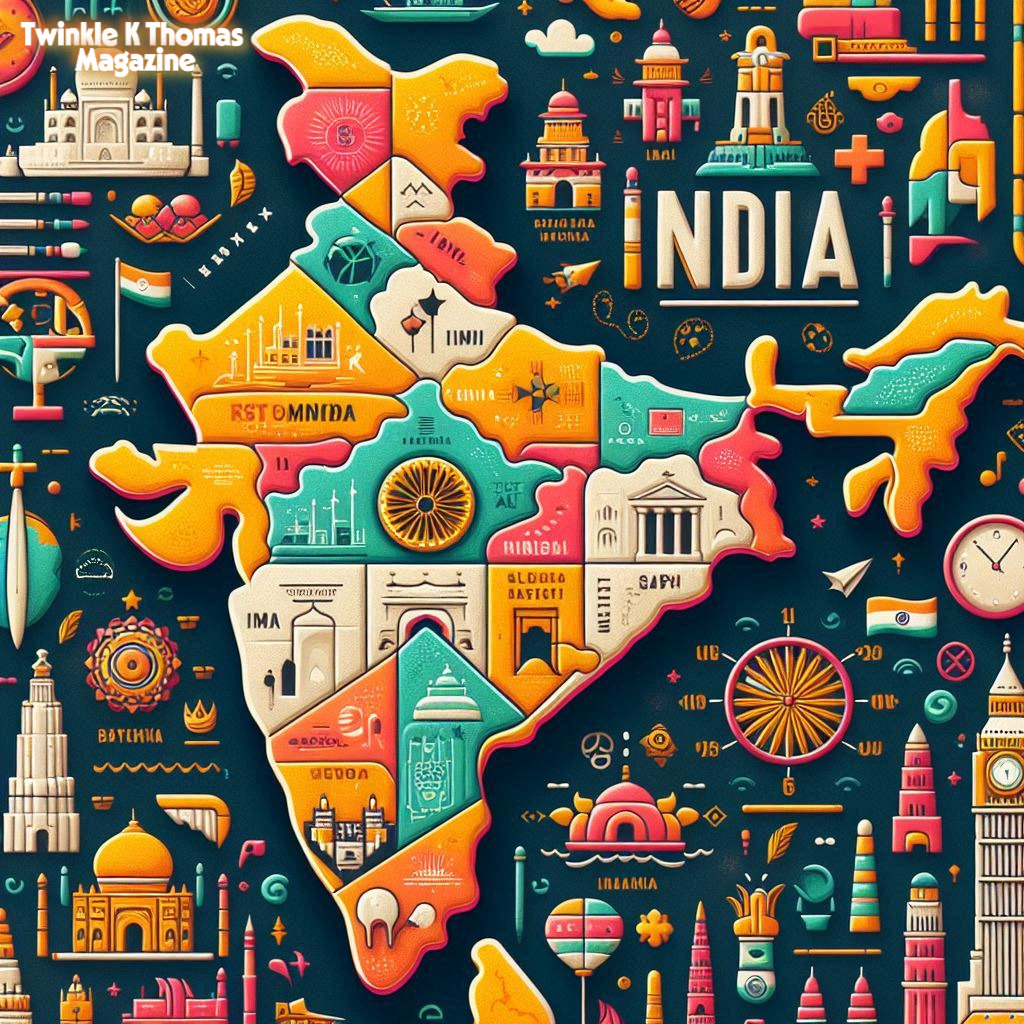
In the vast and diverse landscape of India, understanding the states and capitals forms a cornerstone of general knowledge. This guide delves deep into the 28 states and 8 union territories of India, exploring not just their capitals but also the historical, cultural, economic, and geographical significance behind them. Whether you’re a student preparing for competitive exams, a traveler seeking insights, or simply curious about India’s federal structure, this article provides a thorough explanation. We’ll cover why each capital was chosen, key landmarks, and unique facts to enrich your knowledge. With India’s federal system evolving since independence in 1947, these administrative hubs reflect the nation’s unity in diversity.
India’s political map has undergone changes over the years, with the latest being the bifurcation of Jammu and Kashmir into union territories in 2019. States are self-governing entities with elected legislatures, while union territories are directly administered by the central government. This structure ensures balanced development across regions. Let’s explore them region by region for better clarity.
Northern India: States and Capitals
Northern India is known for its Himalayan ranges, fertile plains, and historical empires. It includes states like Uttar Pradesh, which is the most populous.
- Uttar Pradesh – Capital: Lucknow
Lucknow, often called the “City of Nawabs,” became the capital in 1920 after shifting from Allahabad (now Prayagraj). Its selection was due to its central location and rich Mughal heritage. The city is a blend of Indo-Islamic architecture, with landmarks like the Bara Imambara and Rumi Darwaza. Economically, it’s a hub for handicrafts, IT, and agriculture. Lucknow’s cuisine, famous for kebabs and biryanis, reflects its cultural depth. With a population exceeding 5 million, it’s pivotal in Indian politics, having produced several prime ministers. - Himachal Pradesh – Capital: Shimla
Shimla, a hill station at 2,200 meters, was declared the summer capital of British India in 1864 and retained as Himachal’s capital post-independence. Its cool climate and strategic position amid pine forests made it ideal. Key attractions include the Viceregal Lodge (now Indian Institute of Advanced Study) and Mall Road. The economy thrives on tourism, apples, and hydropower. Shimla’s colonial charm and role in the Shimla Agreement of 1972 add to its historical value. - Uttarakhand – Capital: Dehradun (Winter), Gairsain (Summer)
Dehradun serves as the winter capital, chosen for its accessibility and educational institutions like the Indian Military Academy. Gairsain, in the Garhwal hills, is the summer capital to promote balanced regional development. Uttarakhand, carved from Uttar Pradesh in 2000, focuses on eco-tourism and pilgrimage sites like the Char Dham. Dehradun’s Doon Valley is fertile for basmati rice, while Gairsain symbolizes decentralization. - Haryana – Capital: Chandigarh
Chandigarh, a planned city designed by Le Corbusier, is the shared capital of Haryana and Punjab since 1966. Its modern architecture and high quality of life justified its selection. As a union territory itself, it hosts sectors for administration, education, and IT. Rock Garden and Sukhna Lake are iconic. Haryana’s economy benefits from proximity to Delhi, focusing on automobiles and agriculture. - Punjab – Capital: Chandigarh
Sharing Chandigarh with Haryana, Punjab’s capital choice stems from post-partition reorganization. The city represents neutrality and progress. Punjab, the “Breadbasket of India,” excels in wheat production and Sikh heritage, with the Golden Temple in nearby Amritsar. Chandigarh’s role in the Green Revolution highlights its agricultural significance.
Western India: States and Capitals
Western India boasts deserts, beaches, and industrial hubs, influencing trade and culture.
- Rajasthan – Capital: Jaipur
Jaipur, the “Pink City,” founded in 1727 by Maharaja Jai Singh II, became capital in 1949. Its planned layout and astronomical observatory (Jantar Mantar, a UNESCO site) reflect scientific heritage. Rajasthan’s economy relies on tourism, mining (marble, zinc), and handicrafts. Jaipur’s forts like Amber and palaces embody Rajput valor. - Gujarat – Capital: Gandhinagar
Gandhinagar, built in 1970 as a planned city, replaced Ahmedabad to decentralize administration. Named after Mahatma Gandhi, it features green spaces and the Akshardham Temple. Gujarat’s vibrant economy includes diamonds, textiles, and ports like Kandla. The capital’s design promotes sustainability. - Maharashtra – Capital: Mumbai
Mumbai, formerly Bombay, has been the capital since 1960. As India’s financial capital, it houses the Bombay Stock Exchange and Bollywood. Its colonial history, from Portuguese to British rule, and natural harbor made it a trade gateway. Landmarks like Gateway of India and Marine Drive symbolize its cosmopolitan vibe. - Goa – Capital: Panaji
Panaji, on the Mandovi River, became capital after Goa’s liberation from Portugal in 1961. Its Portuguese architecture, churches like Basilica of Bom Jesus, and beaches drive tourism. Goa’s economy mixes mining, fishing, and casinos.
Southern India: States and Capitals
Southern states are renowned for temples, IT, and classical arts.
- Karnataka – Capital: Bengaluru
Bengaluru, the “Silicon Valley of India,” evolved from a British cantonment to capital in 1956. Its mild climate and educational hubs like IISc attracted IT giants. Cubbon Park and Vidhana Soudha are key sites. Karnataka’s coffee plantations and gold mines bolster the economy. - Andhra Pradesh – Capital: Amaravati
Amaravati, under development since 2015 after bifurcation from Telangana, draws from ancient Buddhist heritage (stupas). It’s planned as a smart city with sustainable features. Andhra’s coast supports agriculture and ports. - Telangana – Capital: Hyderabad
Hyderabad, founded in 1591 by Qutb Shahi dynasty, remained capital post-2014 bifurcation. The Charminar and Golconda Fort highlight Islamic architecture. As an IT and pharma hub, it hosts companies like Microsoft. - Tamil Nadu – Capital: Chennai
Chennai, formerly Madras, established by British in 1639, is the capital since 1956. Marina Beach and Kapaleeshwarar Temple are landmarks. It’s a major auto and IT center. - Kerala – Capital: Thiruvananthapuram
Thiruvananthapuram, or Trivandrum, chosen for its historical significance as Travancore’s capital. Padmanabhaswamy Temple and beaches attract tourists. Kerala’s literacy and spices are notable.
Eastern India: States and Capitals
Eastern India features rivers, forests, and cultural festivals.
- West Bengal – Capital: Kolkata
Kolkata, British India’s capital until 1911, retained status post-independence. Victoria Memorial and Howrah Bridge iconify it. As a cultural hub, it excels in literature and jute. - Odisha – Capital: Bhubaneswar
Bhubaneswar, the “Temple City,” planned post-1948 with ancient Lingaraj Temple. It’s a tech and mining center. - Bihar – Capital: Patna
Patna, ancient Pataliputra, capital since 1912. Golghar and Mahavir Mandir mark it. Bihar focuses on agriculture. - Jharkhand – Capital: Ranchi
Ranchi, selected in 2000 for its plateau location. Waterfalls and minerals drive economy.
Central India: States and Capitals
Central states are landlocked with rich minerals.
- Madhya Pradesh – Capital: Bhopal
Bhopal, founded in 1707, capital since 1956. Lakes and Union Carbide history are key. - Chhattisgarh – Capital: Raipur
Raipur, industrial hub since 2000. Steel and rice are economic pillars.
Northeastern India: States and Capitals
The “Seven Sisters” plus Sikkim offer biodiversity.
- Assam – Capital: Dispur
Dispur, suburb of Guwahati, capital since 1975 for administrative ease. Tea plantations dominate. - Arunachal Pradesh – Capital: Itanagar
Itanagar, chosen in 1974 for central location. Tribal culture and Tawang Monastery. - Manipur – Capital: Imphal
Imphal, historical since ancient times. Polo and Loktak Lake. - Meghalaya – Capital: Shillong
Shillong, “Scotland of the East,” capital since 1972. Caves and rainfall. - Mizoram – Capital: Aizawl
Aizawl, hilltop city since 1987. Bamboo economy. - Nagaland – Capital: Kohima
Kohima, WWII site, capital since 1963. Hornbill Festival. - Tripura – Capital: Agartala
Agartala, near Bangladesh, capital since 1949. Palaces and rubber. - Sikkim – Capital: Gangtok
Gangtok, since 1975 merger. Rumtek Monastery and organic farming.
Union Territories: Capitals and Insights
Union territories handle special administrative needs.
- Andaman and Nicobar Islands – Capital: Port Blair
Cellular Jail symbolizes freedom struggle. Beaches and tribes. - Chandigarh – Capital: Chandigarh
As discussed, planned utopia. - Dadra and Nagar Haveli and Daman and Diu – Capital: Daman
Merged in 2020, Portuguese heritage. - Lakshadweep – Capital: Kavaratti
Coral islands, marine life. - Delhi – Capital: New Delhi
National capital, Mughal and British legacies. - Puducherry – Capital: Puducherry
French colonial vibe. - Jammu and Kashmir – Capital: Srinagar (Summer), Jammu (Winter)
Dual for climatic reasons, Dal Lake. - Ladakh – Capital: Leh
High-altitude desert, Buddhist sites.
In conclusion, India’s states and capitals encapsulate its multifaceted identity, from ancient histories to modern aspirations. This knowledge not only aids in exams like UPSC but also fosters appreciation for India’s federalism. With ongoing developments like new capitals, the map continues to evolve. For more, explore official government sites.